
Advocacy Q&A with Julissa
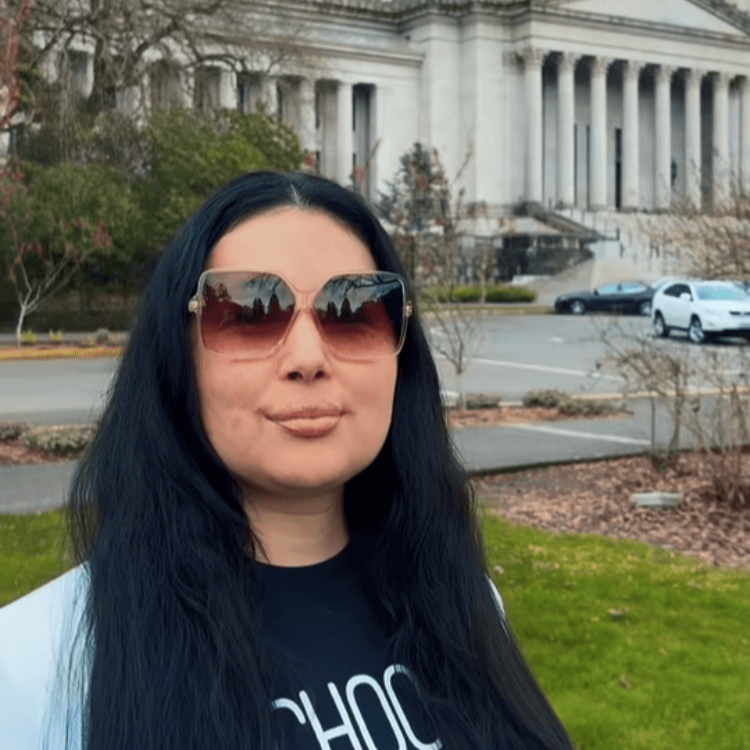
We interviewed Julissa Sanchez (she/her), our Director of Advocacy at CHOOSE 180, about her views on this legislative session the importance of young advocates, and what advocacy looks like at CHOOSE 180.
Read her answers below, or hear from her on our TikTok.
What is the Advocacy Program at CHOOSE 180?
The Advocacy Program is a space where young people who have been impacted by the school to prison pipeline, the injustice system, and other systems of oppression, can explore pedagogies of oppression and liberation. With this knowledge the young advocates are empowered to use their voice and stories to advocate for transformation in their lives, communities, and systems.
In 2025, the Advocacy cohort put their advocacy skills into action. The young advocates led the work by curating and facilitating their own listening session. They invited their local representatives, asking them important questions they drafted, and proposed solutions to the issues young people face. The young advocates followed CHOOSE 180’s legislative priorities with a focus on the Diversion Bill, they learned how to track a bill, sign in pro, got to testify in favor of the bill, and witness it become law.
The success of the the 2025 Advocacy cohort transformed our advocacy program into two different youth centered and youth led advocacy programs:
CHOOSE 180 Advocacy Youth Ambassadors: Young people who have graduated from one of our diversion programs, will be able to be a part of our Advocacy 101 training.
Youth Action Board coming Autumn 2026 (stay tuned for more details)
Why do you advocate?
As the first generation, oldest daughter in a Mexican family and community I culturally and naturally became an advocate at a young age. From translating English documents into Spanish and tutoring the younger people of the barrio.
Growing up in the barrio, poverty, racism, the school to prison pipeline and the injustice system impacted myself and many young people. Witnessing the injustices that my community faced, created a calling within me to want to change the world around us. I wanted my people to experience a better life. I believed we deserved to experience a better life.
I advocate because as a Chicana, I have responsibility to use my voice, my privileges to create, inspire, and work in solidarity with the community to pave new realities, new paths and better choices for our people. I advocate for and with young people because I believe that they are the roots and the truth of our liberation. We, as a society, have the responsibility to create a better world for them, and to ensure that their humanity and voices are respected, protected and invested in.
Why is it important for youth & young adults to advocate in their communities?
It is important for youth and young adults to advocate in their communities because they are the experts in their stories, experiences and solutions. In every room where policies or decisions about young people are being made, young people need to be present and have a say.
I want to amplify the message to young people that their stories matter, that their stories have power, and that they should always speak up. Advocating for yourselves and your communities, by demanding the resources and solutions you want for your communities is the first step in creating the community you want to live in. I am incredibly proud of all the students who walked out of school to protest ICE. It was the biggest demonstration of students/young people of this new generation and it was incredible.
What are you focusing on this legislative session?
This legislative session Advocacy is focused on continuing to support the work to create alternatives to incarceration, and dismantle the prison pipeline.
Our 2026 legislative priorities:
Codify McKinney-Vento Protections in Washington State Law: HB 2594
Eliminate isolation and reduce chemical/mechanical restraint: HB 1795/SB 5654
These priorities were determined based on the issues that our young people have voiced their concerns with.
Why should lawmakers care about the perspectives of young people?
Lawmakers should care about the perspective of young people, because young people hold wisdom and truths about their lived experiences and what the solutions are. The solutions should be led by the most impacted people. In every room where policies or decisions about young people are being made, young people need to be present and have a say.
What are a couple of first steps a person can take to start advocating?
Become informed about the issue you want to advocate for.
Telling your story is a powerful way to advocate.
Start local, connect with school boards about the issues in your school and present the proposed solution.
Writing or speaking with your city and county council about the matters you care most about in your school, community and city.
Connect with your state representatives and senators about the change you want to see in your community.
What has been a rewarding experience you’ve had as the Director of Advocacy?
The most rewarding experience as the Director of Advocacy has been to work alongside brilliant young people and witness the transformation and empowerment of our young people.
Witnessing how they learn to advocate for themselves.
Turn their pain and stories into power and transformation.
Become confident in showing their art.
Working in partnership and solidarity with the community to advocate with and for young people, has been a highlight of being a director of advocacy.
Join us on the journey towards justice by supporting our work. Stay up to date on all things CHOOSE 180 by following us on Facebook, Instagram, LinkedIn, and TikTok.